Adapting construction in a rapidly changing climate
Adapting construction in a rapidly changing climate
Why CIOB’s sustainability conference is so timely.

The construction industry has always been shaped by challenges and change. The climate crisis represents a particular kind of challenge though; a long-term, systemic issue that will affect every aspect of how and where we build. From extreme heat and flooding to supply chain disruption, insurance pressures and evolving regulatory expectations, the built environment is facing a future defined by uncertainty.
Against this backdrop, CIOB’s upcoming conference, Building Resilience: Construction in an Uncertain World, could not be timelier.
Resilience is no longer a future issue
For many years, discussions around climate resilience were framed as preparation for future risks. That is no longer the case.
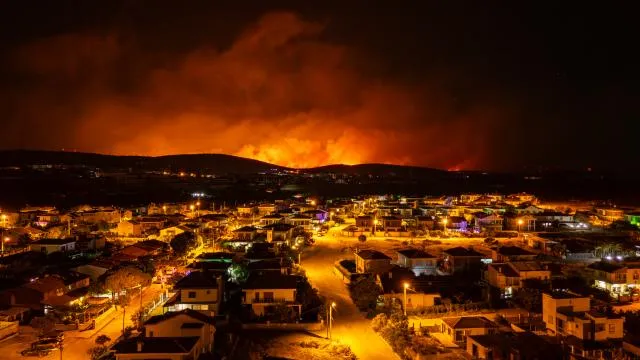
Across the UK and globally, the construction sector is already experiencing the impacts of more frequent and intense weather events. Heatwaves are affecting worker safety and productivity, flooding is disrupting projects and damaging assets, wildfires risk destroying homes, businesses, and community institutions, and infrastructure is increasingly being tested by conditions that were not fully anticipated when many assets were designed.
And this is just the beginning. As Professor of Intensive Care Medicine at UCL and co-lead of the Lancet Countdown on Health and Climate Change, Professor Hugh Montgomery OBE, has said: “This isn't the new norm at all; this is the foothills of absolute catastrophe”
The question is no longer whether climate change will affect the built environment. The question is whether the industry can adapt quickly enough.
The industry must move beyond mitigation
For over a decade, much of the sustainability conversation within construction has focused on carbon reduction and achieving net zero. These efforts of course remain vital. Every 0.1°C of warming is worth avoiding, given that even small increases in global temperature can lead to significantly greater risks for people, ecosystems, and economies. While these efforts remain essential, mitigation alone is not enough.
Even if global emissions are reduced significantly, climate impacts already locked into the system will continue to affect communities, buildings and infrastructure for decades to come. This means the industry must focus equally on adaptation and resilience, alongside mitigation.
A shift from awareness to action
One of the biggest challenges facing the built environment is not a lack of awareness. Most professionals now understand that climate risks exist. The challenge is implementation.
How do organisations assess physical climate risks? How should design standards evolve? What role can retrofit play in improving resilience? How do asset owners balance immediate costs against long-term risk reduction?
These are the questions practitioners are grappling with every day. CIOB's conference is designed to address exactly these kinds of issues through expert insight, panel discussions and real-world case studies from both the UK and internationally.
We hope this focus on tangible solutions will make the event especially valuable for professionals seeking practical guidance and insights rather than high-level ambition alone.
Bringing together influential voices
That’s not to say we won’t also be bringing together leadership voices though!
The event will feature a keynote from Emma Pinchbeck, Chief Executive of the Climate Change Committee, the UK's independent climate advisory body. The Committee’s perspective is particularly important as policymakers, investors and industry leaders increasingly seek evidence-based approaches to managing climate risk.
The conference will also feature a fireside chat with Saul Humphrey, CIOB President 2026/27, Cristina Gamboa, CEO of the World Green Building Council, and Julie Hirigoyen, Non-Executive Director at Willmott Dixon Holdings. Bringing together leadership perspectives from across industry, advocacy and the global green building movement, the discussion promises to explore not only the technical challenges of climate resilience, but the strategic, cultural and policy shifts needed to accelerate change.
At a time when resilience must move into mainstream business decision-making, the opportunity to hear from leaders shaping the future direction of the built environment is particularly valuable.
Alongside the keynotes, the agenda brings together experts from organisations including AtkinsRéalis, Arup, Aviva, Balfour Beatty, Ecologi, Loughborough University, Mott MacDonald, UK Green Building Council and Willmott Dixon, creating an opportunity for attendees to hear diverse perspectives spanning academia, policy, construction, engineering, insurance, sustainability and asset management.
This breadth of expertise reflects the reality that resilience is not a challenge any single discipline can solve alone.
We are also delighted to include voices that reflect our global membership.
Resilience is becoming a business imperative
The conversation around resilience is increasingly extending beyond sustainability teams. Investors, insurers, regulators, clients and communities are all paying greater attention to how organisations identify and manage climate-related risks. Resilience is becoming a core business issue that impacts financial performance, project viability, operational continuity and long-term asset value.
Organisations that fail to adapt risk increasing costs and exposure. Those that embrace resilience can protect assets, enhance stakeholder confidence and create long-term value.
By bringing together leaders from across the built environment, the conference provides a timely platform for exploring how resilience can be embedded throughout the asset lifecycle, from planning and design through to operation and retrofit.
An opportunity to shape the future
The industry is at a pivotal moment. The decisions being made today will influence the performance of buildings and infrastructure for decades to come. The built environment must not only reduce its environmental impact but also ensure that the places we create remain safe, functional and resilient in an increasingly uncertain world.
CIOB's Building Resilience: Construction in an Uncertain World conference recognises this reality. It brings together the expertise, leadership and practical insight needed to help the industry move from recognising climate risks to actively addressing them.
The construction industry does not simply respond to change. Through innovation, investment, and leadership, it can actively shape the future, and the industry must not only adapt but also recognise the opportunity to create more sustainable and resilient communities.
Be part of the discussion and register for your place today.
Contact our Press Office
We welcome requests for information, comments and interviews from journalists across the globe, so please feel free to contact us: