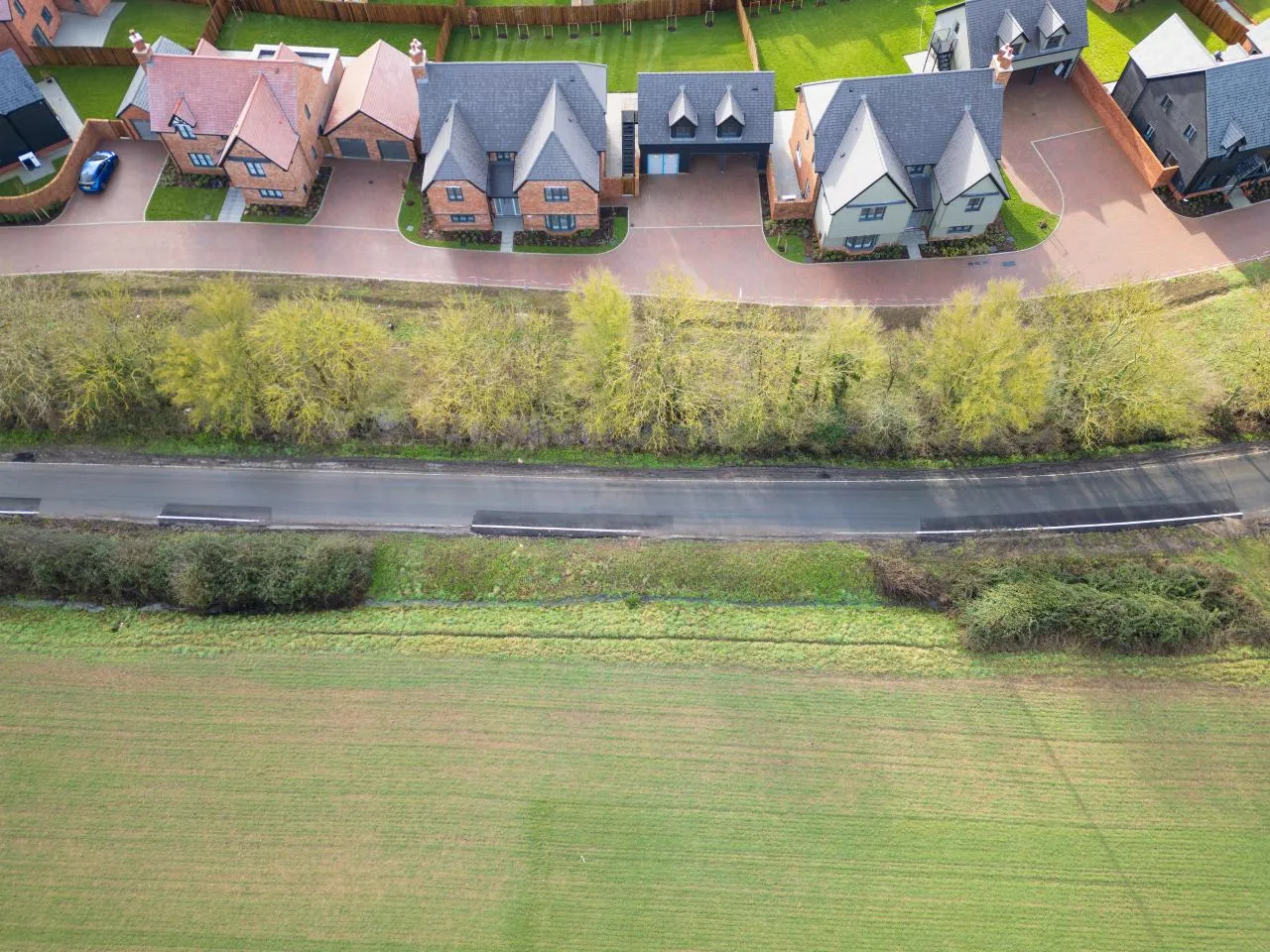
Why adequate housing for all must also mean housing in harmony with nature
Why adequate housing for all must also mean housing in harmony with nature
This year's World Habitat Day theme, Adequate Housing for All, comes at a critical moment. As communities around the world grapple with housing shortages, climate change and growing environmental pressures, the conversation must extend beyond simply building more homes.

This year's World Habitat Day theme, Adequate Housing for All, comes at a critical moment. As communities around the world grapple with housing shortages, climate change and growing environmental pressures, the conversation must extend beyond simply building more homes. We need to consider what makes a home truly adequate in the twenty-first century, and whether the places we create today will remain safe, healthy and resilient for generations to come.
Adequate housing is one of the foundations of a fair and prosperous society. Yet in an era of climate change, biodiversity loss and increasing environmental risk, providing housing for all is about more than meeting demand. It is about creating homes and communities that are resilient, connected to nature and capable of supporting both people and planet in the decades ahead.
As we confront the urgent need to deliver more housing, we must ask what kind of housing are we building, and how well will it serve people in a rapidly changing climate?
Adequate housing is about much more than four walls and a roof. It is about security, health, accessibility, affordability and the ability to live with dignity. Increasingly, it must also be about resilience. Homes that overheat in summer, flood during heavy rainfall or leave residents disconnected from green space cannot truly be considered adequate in the face of today's environmental challenges. This is where nature-based solutions have a vital role to play.
Building Homes That Work with Nature
Nature-based solutions use natural systems and processes to address societal challenges while delivering benefits for people, biodiversity and the climate. In the context of housing and communities, they can range from street trees and green roofs to sustainable drainage systems, wetlands, urban forests and biodiversity-rich public spaces.
These interventions are generally viewed as environmental enhancements, but they should increasingly be recognised as essential infrastructure.
Trees and green spaces can help cool neighbourhoods during heatwaves. Wetlands and sustainable drainage systems can reduce flood risk. Green corridors can support wildlife while creating healthier, more attractive places for people to live. Collectively, these measures make communities more resilient, more liveable and better prepared for the climate conditions of the future.
As the construction sector seeks to deliver the homes needed to address housing shortages, integrating nature from the outset is not a nice to have. It is a necessity.
The Climate Resilience Challenge
Many of the homes being designed and built today will still be standing in 2080 and beyond. They will face different temperature extremes, rainfall patterns and environmental pressures than historic norms.
Yet too often, housing development remains focused on short-term delivery targets rather than long-term resilience. New communities are still being built in areas vulnerable to flooding, while opportunities to incorporate natural cooling, water management and biodiversity enhancements are often missed.
Nature-based solutions provide an opportunity to address multiple challenges simultaneously. A well-designed green space can improve mental wellbeing, support biodiversity, reduce urban heat and manage stormwater. Few engineered solutions can deliver such a wide range of benefits with such lasting value.
If we are serious about adequate housing for all, we must also be serious about ensuring those homes remain safe, comfortable and resilient throughout their lifetime.
Beyond Homes: Creating Thriving Communities
World Habitat Day reminds us that housing does not exist in isolation. People need access to transport, services, employment, education, and healthcare. Equally, they need access to nature.
Research consistently shows that greener neighbourhoods support physical health, mental wellbeing and community cohesion. Access to parks, trees and natural spaces can improve quality of life and help tackle inequalities, particularly in densely populated urban areas.
Nature-based solutions therefore offer an opportunity not just to improve homes, but to create communities where people can thrive.
This is particularly important as towns and cities continue to grow. The challenge is not simply to accommodate more people, but to ensure growth enhances rather than diminishes the health and resilience of our communities.
A Responsibility for the Built Environment
The built environment sector has a critical role to play in turning this vision into reality.
Designers, planners, developers, contractors, asset managers and policymakers all influence how housing is delivered and how communities evolve. Embedding nature-based solutions into mainstream construction and development practices requires collaboration across disciplines and a willingness to think beyond traditional project boundaries.
Encouragingly, examples already exist across the UK and internationally. From sustainable urban drainage integrated into housing developments to large-scale urban greening initiatives, the evidence is growing that nature-based approaches can deliver significant social, environmental and economic value.
The challenge now is scaling these solutions, so they become standard practice rather than best practice case studies.
Looking Ahead
The theme of World Habitat Day 2026 challenges us to make adequate housing a reality for everyone. Achieving that ambition will require more homes, but it will also require better homes and better communities.
In a world facing climate change, biodiversity loss and increasing pressures on urban environments, adequate housing cannot be separated from environmental resilience. The most successful communities of the future will be those that work with nature rather than against it.
As we mark World Habitat Day, let’s broaden our understanding of what adequate housing means. It is a safe, healthy and resilient home, connected to thriving natural environments and supported by communities that can withstand the challenges ahead. Housing for all should also mean a future where both people and nature can flourish together.
Contact our Press Office
We welcome requests for information, comments and interviews from journalists across the globe, so please feel free to contact us: