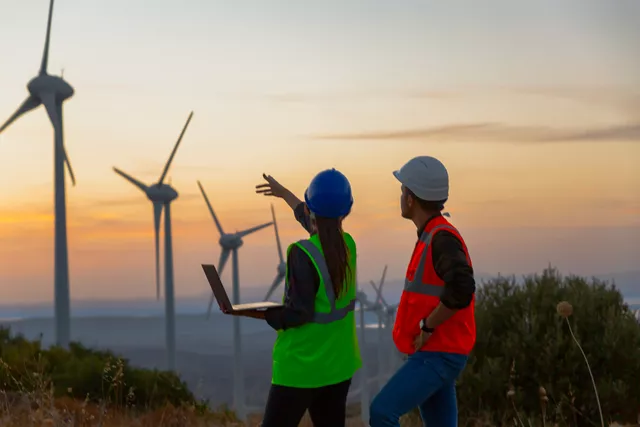
Celebrating 20 years of Chartered Environmentalists
Celebrating 20 years of Chartered Environmentalists
A conversation with two of CIOB's first registrants.

Two decades ago, the Chartered Institute of Building (CIOB), in partnership with the Society for the Environment (SocEnv), opened the door for construction professionals to achieve Chartered Environmentalist (CEnv) registration — uniting industry expertise with a recognised standard of environmental leadership.
This month marks a significant milestone as the CIOB celebrates the twentieth anniversary of partnership with SocEnv, who license CIOB to award the Chartered Environmentalist (CEnv) registration. Over two decades, the designation has become a recognised benchmark for professionals committed to applying environmental expertise and sustainable leadership in their construction practice.
To mark the occasion, I interviewed two of the first CIOB Chartered Environmentalists – Stephen Wielebski who is Principal Partner at an independent construction and house building consultancy, and Ching King (CK) Ng who is a quantity surveyor. As early adopters of the registration, they have witnessed first-hand how environmental sustainability has evolved from a specialist area of interest to a core business priority within the built environment.
They reflected on what had inspired them to pursue the qualification, how the role of environmental professionals has changed, and the impact Chartered Environmentalist status has had on their careers. They also shared perspectives on the challenges and opportunities facing the industry today and offered advice to the next generation of professionals looking to lead the transition towards a more sustainable future.
What motivated you to become Chartered Environmentalists in the first place?
Stephen was motivated to develop more sustainable environmental practices, address the growing challenges of climate change and flood risk, and strengthen his professional commitment to environmental sustainability:
“The investigation and remediation of contaminated land was already one of my principal areas of responsibility as a Technical Director working for major house builders. The often-preferred remediation process (dig and dump) generated huge quantities of waste (and still does) with disposal to licensed landfill the often-preferred approach, and one that increases greenhouse gas emissions. This was never sustainable and exploring more environmentally sustainable alternatives formed part of my 4-year post-graduate studies and research completed in June 2003. At the same time, concerns regarding climate change, flood risk, and the impact they had on the environment and construction in general, were catalysts that crystallised how important becoming a member of the Society of the Environment really was,” he said.
For CK, a key driver was the importance of collective action for a sustainable future.
“No one can achieve sustainability alone. However, through the participation of all humanity altogether in the world, a difference could really be made towards the ultimate goal of giving continuous protection to and enhancement of the environment as well as prudent use of resources. In addition to formal peer recognition of expertise in sustainability and environmental management, I trusted becoming a Chartered Environmentalist would be able to foster and promote the significance of environmental sustainability in construction being struck on a balance amongst the three key pillars (environmental, society and economy).”
A Profession in Transition
Stephen and CK were both clear there had been a significant shift in the industry, but this had not been fast enough.
“Progress over the last 20 years has been slow but is beginning to gain greater traction as we experience at first hand the consequences of climate change, especially the tangible impact it is having on the environment. Amongst the cohort of partner and stakeholder interests there remains a perceptible reluctance to change, often influenced by concerns relating to cost but improved environmental outcomes are not necessarily cost prohibitive,” said Stephen.
According to CK: “Over the last 20 years, environmental sustainability in construction has been evolving from a niche and voluntary practice being solely focused on basic energy efficiency into a highly regulated, mainstream industry standard centred-on carbon neutrality, circular economies and life-cycle green materials.”
Barriers to faster progress
CK was very clear: “Tardy progress towards sustainable development has been caused by factors such as massive global financing gap, geopolitical instability as well as fragmented policy frameworks from worldwide and macro perspective. Despite the rapid approaching deadline of United Nations' 2030 Agenda, almost all current reports indicate that only about 15% to 35% of the Sustainable Development Goals (SDGs) targets are currently on track! From micro and built-environment perspective, progress towards sustainability is frustrated by economic trade-off and short-term profit prioritisation, fossil-fuel dominance as well as greenwashing or superficial compliance.”
Milestones and highlights
For CK, who was born in Hong Kong but resides in Australia, key milestones in sustainability in construction over the past 20 years reflect a shift from voluntary green building initiatives to mandatory whole-life carbon management.
The first major milestone he highlighted was the widespread adoption of certification schemes such as LEED and BREEAM, which drove improvements in operational energy efficiency and established sustainability as a recognised consideration in building design.
A second milestone was the growing focus on embodied carbon and circular economy principles, expanding attention beyond building operation to the environmental impacts of materials, construction, maintenance, and end-of-life stages.
The most recent milestone he highlights has been the rise of net-zero commitments and regulatory mandates, embedding lifecycle carbon accounting and decarbonisation targets into policy and industry practice, and transforming sustainability from a voluntary objective into a core requirement for the built environment.
Stephen sees his involvement with the SocEnv and CIOB partnership itself as one of the highlights of his career: “I have been involved in the CIOB’s relationship with the Society of the Environment from the outset to the current day, being part of the CIOB team responsible for developing and refining the application process, inclusive of the supporting guidance, for CIOB Members and Fellows aspiring to become Chartered Environmentalists. The most rewarding aspect has been the privilege of being involved in almost every CEnv application whether it be as an assessor, verifier, or a member of the Review Panel.”
A diverse community of experts
The CEnv community is a network of professionally accredited environmental and sustainability leaders from diverse sectors who share expertise, uphold high professional standards, and drive positive environmental change. Stephen was keen to highlight the diversity of expertise among our CIOB Chartered Environmentalist:
“The eclectic diversity of CIOB members brings an involvement in almost every facet of the construction process whether it be from an archaeological perspective or the re-purposing of discarded wind turbines to create alternative low carbon construction products and solutions.
“Each one of us, irrespective of our role, has an intrinsic relationship with the environment. The decisions, recommendations, and leadership roles we are involved with have a direct impact on the environment. Moreover, as the consequences of climate change become an increasingly important consideration, experienced construction professionals who can demonstrate and articulate with confidence the importance of environmental sustainability will become even more important. The climate is changing, so should we as experienced and respected professionals, business as usual is no longer tenable.”
There was a shared sense that there has never been a more relevant time to become a CIOB Chartered Environmentalist.
As Stephen says, “We must recognise the importance of environmental sustainability and the impact each of us has on the environment. The environment impacts on construction and vice versa. The almost unprecedented dry conditions we have experienced in the summer of 2026 reaffirm a changing climate to the extent we now face serious water shortages and the need for all new construction projects to consider water-use neutrality. Moreover, the successive heatwaves we have experienced are having adverse consequences for foundation construction. Likewise, how we respond to overheating in all building typologies – these are serious outcomes that require our attention.
“From a construction perspective, the importance of environmental sustainability and the role that construction plays are gaining a level of importance that demands even greater attention from all construction professionals and not just CIOB members.”
Becoming a CIOB CEnv demonstrates that you have the expertise, experience and professional commitment to lead sustainable development and environmental improvement within the built environment. As organisations face increasing pressure to deliver on the climate and biodiversity crises, CEnv provides a recognised mark of environmental leadership that helps you stand out, enhance your professional credibility and access new career opportunities. It also validates the impact you are already making, connects you with a global network of environmental professionals, and shows employers, clients and stakeholders that you meet the highest standards of environmental practice and are committed to driving positive change.
My own view is that all CIOB members should be working towards this registration. In an industry that will increasingly be defined by how we respond to the climate crisis, we cannot afford to be by-standers.
As we mark the 20-year milestone, we celebrate not just the longevity of the partnership with SocEnv, but also the many CIOB members who have used their expertise to drive sustainable practices, influence policy, and inspire change across the construction industry. But this anniversary must be more than a reflection on the past – it is also a call to continue shaping a future where every project leaves a positive legacy for people and our planet.
Contact our Press Office
We welcome requests for information, comments and interviews from journalists across the globe, so please feel free to contact us: