Built environment must prioritise climate resilience
Built environment must prioritise climate resilience
Climate risk is no longer a future threat, but an immediate priority for the built environment.

The World Meteorological Organisation’s State of the Global Climate Report 2025 last week highlighted 2015 - 2025 as the hottest 11-years on record, with 2025 ranking in the top three at 1.43 °C above the pre-industrial average. The report highlighted a stark warning: the Earth’s climate is more out of balance than at any time in observed history.
A record energy imbalance is warming oceans to unprecedented levels and making weather more extreme. Global events last year, including intense heatwaves, heavy rainfall, and tropical cyclones, caused widespread disruption and highlighted the critical vulnerabilities in our interconnected natural, social and economic systems.
Responding to the report, Antonio Guterres, UN Secretary General, said:
“The global climate is in a state of emergency. Planet Earth is being pushed beyond its limits. Every key climate indicator is flashing red. Humanity has just endured the 11 hottest years on record. When history repeats itself 11 times, it is no longer a coincidence. It is a call to act.”
Climate resilience is fast becoming an urgent necessity within the built environment industry as we recognise our role in future-proofing communities against the accelerating impacts of climate change.
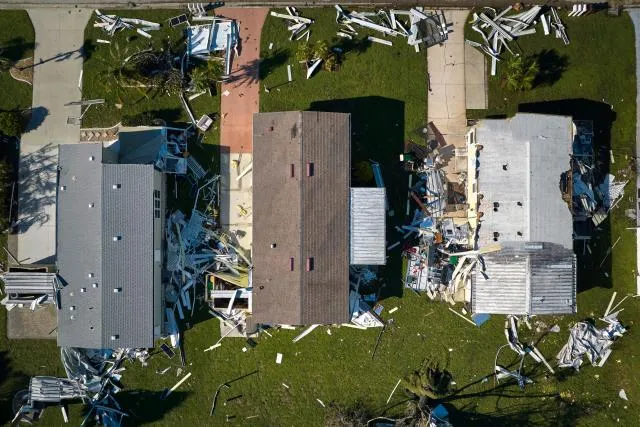
As extreme weather events like intense heatwaves, floods, and storms increase in frequency and severity, the built environment faces unprecedented risks that threaten structural integrity, operational continuity, and public safety.
Given that buildings generally have lifespans exceeding 60 years, current construction and renovation projects must be designed to withstand future climate scenarios, not just historic norms.
By adopting climate-resilient strategies—such as nature-based solutions, passive design, and durable materials—the industry can reduce economic losses, lower long-term repair costs, and ensure a safer, more sustainable environment for occupants.
Embedding resilience into every stage of planning and construction is essential to manage risk, enhance occupant wellbeing, and maintain vital infrastructure in a rapidly changing world. But extreme weather also has an impact on construction operations and supply chains as well.
CIOB resources to strengthen climate resilience
CIOB recognises that our members need support in understanding their roles in relation to climate resilience.
We recently published a new Technical Information Sheet on Climate Resilience & Adaptation in the Built Environment, which members can download from the CIOB Academy free of charge (also available to non-members for a modest fee).
We will be making climate resilience the theme of our annual international Sustainability Conference on Wednesday 14 October 2026 (save the date) and are looking for practitioners to join panel discussions and share real world case studies.
In the meantime, registrations are already open for our global webinar on Passive Design, Construction and Cooling for a Hotter Planet on 15 June 2026 and we have a number of related recorded webinars available now; just search ‘climate resilience’ in the CIOB Academy.
The impacts of climate change on the built environment can no longer be seen as distant future risks but must be reframed as immediate priorities and we must all prepare to play our part.
Climate Resilience: Why we need to act now
What is climate resilience? Why is it so important within the built environment? Amanda Williams, CIOB's Head of Environmental Sustainability, explains what climate resilience and adaptation is, and why the built environment must prioritise climate resilience - with climate risk no longer a future threat, but an immediate priority for the industry.
Contact our Press Office
We welcome requests for information, comments and interviews from journalists across the globe, so please feel free to contact us: