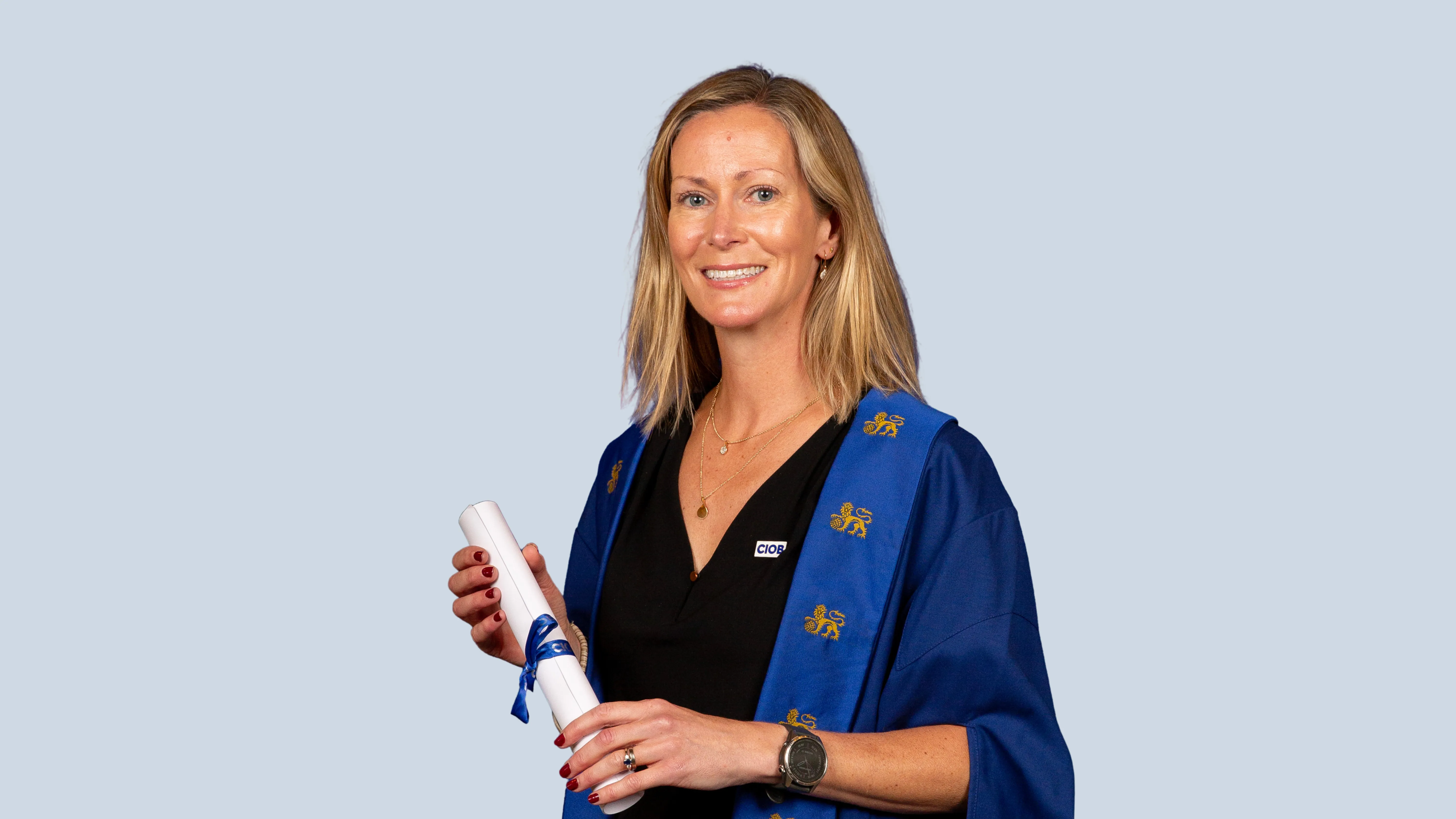
Emily Pope FCIOB: Project Director
Emily Pope FCIOB: Project Director
Undergraduate degree in languages.
What qualification did you do?
I graduated from the University of Leeds with an undergraduate degree in languages (BA Hons, French) in 2001. I later completed a PG Certificate in Sports Development at Sheffield Hallam University in 2007.
What attracted you to construction?
My route into construction was shaped by a passion for sport and public service rather than a traditional pathway. After working in languages and education, I joined Sport England, where I led community funding programmes and supported investment in capital projects aimed at increasing participation in sport and physical activity.
Delivering major capital investment programmes, including high-profile projects linked to the Commonwealth and Olympic Games, highlighted the significant impact that well-planned and delivered construction can have on communities. This sense of purpose ultimately led me to pursue a career in the built environment and to my current role at the Department for Education.
What were the main challenges to entering construction?
Entering the industry from a non-construction background, I initially lacked technical knowledge. I also felt the need to work harder to establish credibility, particularly as a woman in the property and construction sector.
I addressed this by leveraging skills developed earlier in my career, including stakeholder engagement, financial planning, and project delivery, alongside leadership and teamworking experience gained through over 20 years as a netball player and coach.
Working within multi-disciplinary teams, learning from experienced professionals, and undertaking formal training enabled me to build my technical understanding and progress into a senior leadership role. I have also drawn inspiration from female role models who successfully balance senior careers with family life.
Which skills from your degree were transferable to construction?
My languages degree developed strong communication skills, adaptability, and an appreciation for different perspectives, all of which have been invaluable. These skills have supported effective engagement and collaboration across large-scale construction programmes.
The ability to communicate clearly, build trust, and work collaboratively have been central to my progression and effectiveness as a project leader. The discipline developed for independent study continues to support my continued professional development today.
How did your employer support your development?
Employer support has been critical throughout my career. This has included access to professional development opportunities, project management qualifications, and the opportunity to lead major investment programmes and multi-million-pound projects.
At the Department for Education, I have gained experience across the full project lifecycle, often in complex and fast-paced environments, supported by an incredible team of professionals around me who I continue to learn from, including surveyors, architects, town planners, lawyers, estates professionals and project managers.
I have also been supported to complete APM qualifications, the Project Leadership Programme at Cranfield University, and most recently the FCIOB Experienced Practitioner pathway to achieve accreditation as a Chartered Construction Manager. Supportive leadership, exposure to a varied portfolio of projects, and a strong culture of continuous development have all been key to my career growth.
What advice would you offer to graduates from a similar background?
Keep an open mind and don’t be put off by a non-traditional background. Follow opportunities aligned with your interests, be willing to step outside your comfort zone, and don’t be afraid to move between sectors.
The construction and property sectors span a wide range of industries, from the Civil Service to private sector, and value a broad set of skills. Investing in professional development while building strong networks can significantly support your progression. Non-traditional career paths bring valuable perspectives and strengths to the industry.
Transfer your skills
Contact our Press Office
We welcome requests for information, comments and interviews from journalists across the globe, so please feel free to contact us: