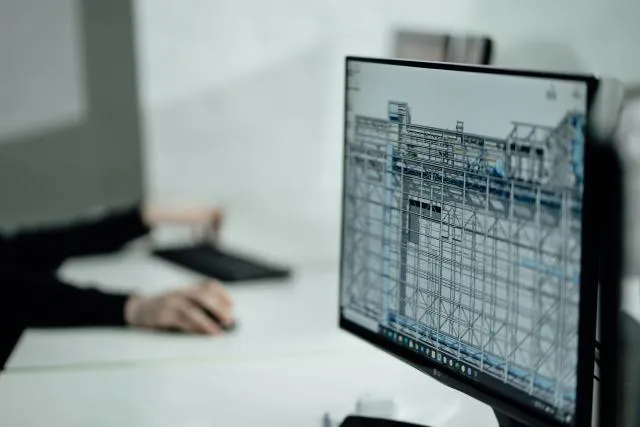
What are Digital Twins in construction?
What are Digital Twins in construction?
Understanding the construction industry’s terminology.
For newcomers to construction, the terminology and acronyms used across the sector can be confusing. One term used regularly is “digital twins”, but what does this mean?
In short, digital twins are virtual representations of physical construction assets, systems or environments that are connected to project and operational data to support better decision making throughout an asset’s lifecycle.
They are increasingly applied to complex infrastructure such as transport corridors, energy networks, water systems, flood defences and industrial campuses. In these contexts, twins often integrate design models, survey data, operational systems, inspections and performance data rather than relying solely on sensors.
How Digital Twins work
Digital twins are not a single piece of software or technology, but an ecosystem bringing together models, connected data environments, analytics and workflows. A digital model of a building or other structure is created and updated using information gathered from multiple sources. Depending on the use case, this may include sensor data, site inspections, survey information, maintenance records, operational systems and project delivery data. Unlike static 3D models, digital twins can support a two-way flow of information between the physical and virtual environment, enabling teams to test changes, evaluate impacts and improve operational understanding.
This allows construction managers and other construction professionals to monitor how a project or asset is performing, identify risks, assess future scenarios and make more informed decisions throughout design, construction and operation.
While digital twins are often created during the design and construction stages, they can also continue to evolve once an asset is operational. This enables asset owners and facilities managers to monitor performance, identify issues earlier and support long-term maintenance and optimisation.
Key benefits of Digital Twins
Digital twins bring multiple advantages for construction and infrastructure projects, improving planning, coordination and decision making.
By linking operational and project data with digital models, project teams can identify problems before they occur and better understand how changes may affect the wider asset. For example, altering a design parameter such as building height or façade layout within a twin can help teams assess the impact on systems such as heating, ventilation and air conditioning (HVAC), structural performance, energy demand or operational efficiency before physical work takes place. This can reduce delays, improve safety and minimise costly rework.
Digital twins also support scenario planning and risk management. Teams can use them to explore how assets may perform under different environmental, operational or maintenance conditions, helping organisations make more informed strategic decisions.
Once an asset is built, the twin can continue to support construction monitoring, operations and maintenance by bringing together data such as occupancy patterns, energy consumption, inspection records and structural performance. This can improve long-term efficiency, sustainability and asset resilience.
Implementation challenges
Collecting and managing large volumes of data can be complex, particularly when information is generated across multiple platforms, contractors and operational systems. Ensuring interoperability between Building Information Management (BIM), Internet of Things (IoT) and analytics platforms is essential if the twin is to function effectively.
Data quality is also important. For digital twins to provide reliable insights, information must be fit for purpose, validated, traceable and properly governed. Without strong data management and clear provenance, even sophisticated digital twins can produce inaccurate or misleading outputs.
Cybersecurity is another important consideration. Since digital twins can represent critical infrastructure and operational systems, they may become potential targets if not properly secured.
Ensuring construction teams have the necessary skills and experience to design, manage and maintain these systems is equally important, creating opportunities for professionals with expertise in data management, systems engineering, analytics and digital technology.
Industry adoption
Adoption of digital twins across construction and infrastructure is growing rapidly. As cloud computing, IoT, artificial intelligence and analytics technologies continue to mature, applications are expanding from individual buildings to transport networks, utilities and whole-city environments.
Digital twins are increasingly supporting urban planning, optimising infrastructure performance, improving environmental management and enhancing operational resilience at scale.
Ultimately, digital twins extend BIM into the dynamic world of construction and operations. By linking operational and project data with digital models, they give project teams greater visibility throughout the asset lifecycle, supporting safer, more efficient and more sustainable outcomes.
Contact our Press Office
We welcome requests for information, comments and interviews from journalists across the globe, so please feel free to contact us: