The legacy question behind every Olympic project
The legacy question behind every Olympic project
One of the most striking things about the Australian construction industry is its confidence.
There is a clear sense of ambition, and just as importantly, a recognition that construction professionals play a vital role in shaping the economy and society. That confidence is visible in how the industry speaks about itself, but also in how it is viewed more widely. That matters.
Because when a profession is understood and valued, it creates the conditions for bigger thinking. And few opportunities demand bigger thinking than the Olympic Games.
In Brisbane, where I was recently discussing the future Olympic Games with industry and education leaders, there is real energy and ambition about what the Games in 2032 could bring. The conversation naturally focuses on delivery, timelines and infrastructure. But there is a bigger question that needs equal attention.
What will be left behind?
The Olympics bring a unique moment of focus. They attract investment, accelerate decision making and place construction at the centre of national ambition. But the true measure of success is not the event itself. It is the legacy that follows.
We have seen many examples where that legacy has fallen short. The energy of the Games fades, and what remains does not live up to what was promised. But we have also seen what good looks like.
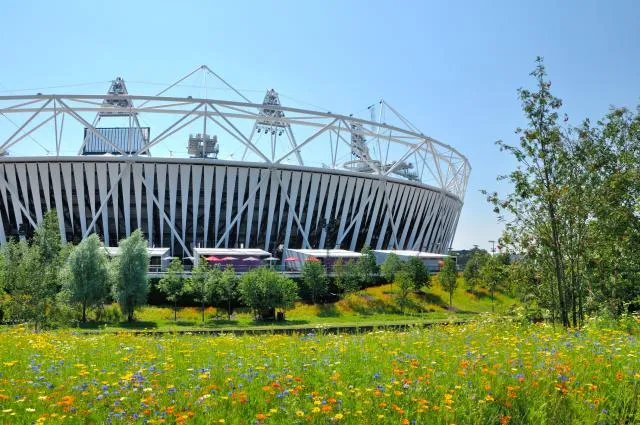
London 2012 is widely regarded as a success, and not simply because of the Games themselves. At a time when the global financial crisis was placing real strain on the construction industry, the Olympic programme helped sustain jobs, skills and confidence.
More than that, it transformed a part of London that had long been overlooked. What was once underused and disconnected is now a thriving, well connected and vibrant place. That is what legacy looks like.
It is not just about buildings. It is about regeneration, opportunity and long-term value for communities.
There was also a deeper legacy within the industry itself. The way London 2012 was delivered raised standards in areas such as safety, collaboration and project management. Those lessons did not stay within the project. They were shared and carried forward into future work across the sector.
That is where real value is created.
Brisbane presents a different kind of challenge. Unlike London, it does not have a single, obvious area waiting to be transformed at scale. That makes the question of legacy even more important.
If the opportunity is less visible, then the intention must be stronger.
Olympic projects should never be seen as an end in themselves. They are a means to something bigger. A chance to improve infrastructure, strengthen communities, develop skills and push the industry forward.
There is also a wider context to consider.
We are operating in a world where uncertainty is becoming the norm. Financial pressures are real, and when budgets tighten, ambition is often the first thing to be reduced.
That is understandable. But it is also where leadership matters most.
Moments like this require us to look beyond immediate constraints and think about long term impact. To ask not just what we can deliver today, but what we want to leave behind for the future.
Construction has a unique role to play here. We do not just build structures. We shape places, economies and lives.
CIOB members have been part of that story across Olympic Games around the world, from Beijing to London and beyond. They have delivered complex projects and helped define what good looks like at a global level. That experience matters.
As Brisbane looks ahead, there is a real opportunity to build on that knowledge and ensure that the Games leave a meaningful and lasting legacy.
The Games will come and go. They always do.
What matters is what remains. The places we shape, the communities we support and the standards we set as a profession. That is the true legacy of projects like these. And it is the responsibility we carry as an industry.
Contact our Press Office
We welcome requests for information, comments and interviews from journalists across the globe, so please feel free to contact us: